Skin cancer is a common and locally destructive cancerous growth of the skin. It originates from the cells that line up along the membrane that separates the superficial layer of skin from the deeper layers. The vast majority of these sorts of skin cancers have a limited potential to spread to other parts of the body and become life-threatening. There are three major types of skin cancer: Basal Cell Carcinoma, Squamous Cell Carcinoma and Melanoma. Skin cancers are not considered to be hereditary; however, genetics is important because your skin colour is hereditary. Skin cancers are caused by exposure to UV light, putting fair-skinned people at more risk of getting skin cancer. Skin cancer typically appears on the skin that has been exposed to sunlight repeatedly for many years, such as the nose, ears, back of the neck and the bald area of the scalp. If any of the below-mentioned symptoms are experienced, an appointment with a dermatologist needs to be made to check for the possibility of skin cancer. The most important warning sign for melanoma is any change in size, shape, or colour of a mole or other skin growth. Watch for changes that occur over a period of time. The ABCDE system tells you what changes to look for – A definitive way to determine if you have skin cancer is to have a skin examination done by a dermatologist. A skin biopsy is then done to confirm the diagnosis. A small portion of the tumour is sliced away and then examined under a microscope by a pathologist. There are several effective ways of treating skin cancer. The location and the size of the tumour, the microscopic characteristics of cancer, as well as the general health of the patient determine what form of therapy will be needed. Topical medications can be used in the case of superficial basal cell carcinomas. A fast, easy, and relatively inexpensive method of treatment is destruction by electrodesiccation and curettage. The more expensive and complicated procedure to remove skin cancer would be surgical excision. Mohs micrographic surgery is the treatment of choice for tumours where normal tissue preservation is vital, where the tumour margins are poorly defined, in tumours that have been previously treated and have recurred, and in certain high-risk tumours. For patients who are not candidates for surgical procedures, radiation therapy is recommended. Early detection of skin cancers can lead to better outcomes. If you have any moles or spots that are suspect, see a dermatologist for a skin cancer screening.
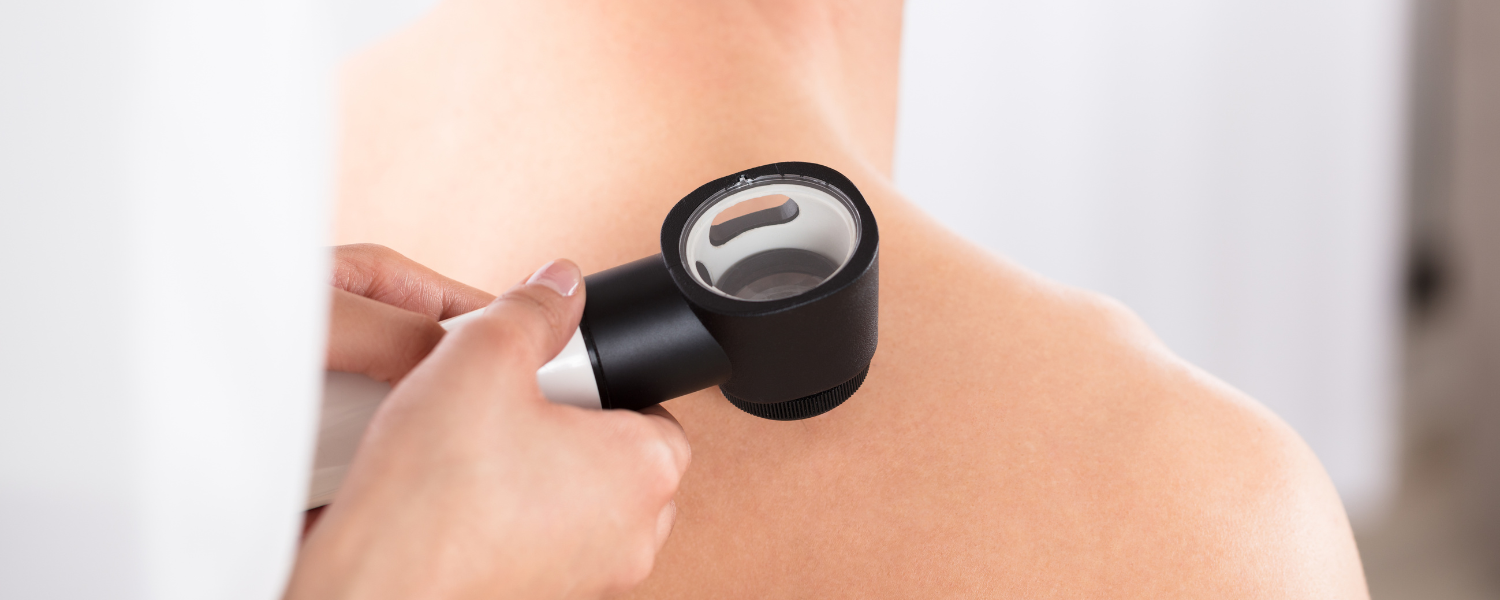
Melanoma Detection
Anyone can get Melanoma. Early detection is critical because melanoma is aggressive. If Melanoma is found early enough it can almost always be cured using surgery. A thorough self-examination once a month and a visit to a dermatologist once a year can help with detecting melanoma early. During your self-examination check your entire body for any moles or discolouration that look new or different. Make sure to do the self-examination in a well-lit room in front of a full-length mirror. For those hard-to-see areas, use a hand-held mirror. Examine all areas of your body, including your palms and soles, scalp, ears, nails, and back. If you find any spots on the skin that are new or changing in size, shape, or colour, make an appointment to see your doctor as soon as possible. The dermatologist will check for suspicious moles or lesions on your entire body when you go for your yearly check-up. A photographic record of certain moles may be kept, so any changes can be tracked. A full-body photo may be taken so moles can be tracked over time and new ones can be seen more readily. This is sometimes known as mole mapping. Many dermatologists use a technique called dermatoscopy to look at spots on the skin more clearly. People who are at higher risk of melanoma should see a dermatologist on a regular basis. If detected early a simple and painless surgical excision under local anaesthetic is all that is needed to get rid of a dangerous mole. Melanoma generally starts out by spreading on the superficial layers of the skin. Once the melanoma starts to penetrate into deeper layers of the skin, curability drops 50% and procedures such as invasive surgery and chemotherapy will usually be needed.